Product Description
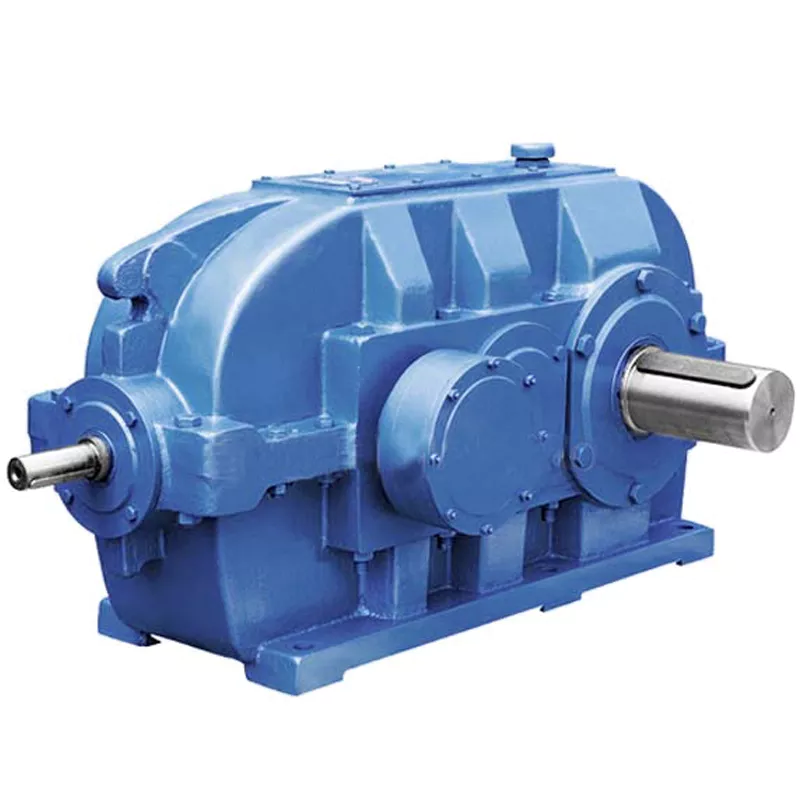
ATA Series Shaft Mounted Gear Reducer For Mining
ATA series shaft mounted gearbox(speed reducer) with helical hardened gears has the characteristics of high carrying capacity, smooth transmission, light weight, low energy consumption and so on. Input shaft of ATA speed reducer is connected with gear motor by belt pulley, hollow output shaft is linked with a key. It can be replaced by electric drum as power for belt conveyors and lifting equipments. ATA series shaft mounted gearbox could be attached with back-stop to avoid the working machine back skating, and conveniently mounted by tie rod. ATA series shaft mounted speed reducer is widely applied in the mining equipments, concrete mixing batching plant, stone crushers, sand making production line and other belt conveyors, mechanical transmission areas.
Mechanical belt conveyors drive system is composed of ATA shaft mounted speed reducer, torque arm, pulleys and gear motors, whose power transmission from the gear motor to the gearbox through the pulley, and then speed reducer passed to the drive pulley through the hollow output shaft and the gearbox is fixed by torque arm, anti-slip device can be configured. The system is convenient to install,use and maintain.
The features of ATA shaft mounted gearbox:
Mounting Type: Tie rod Hanging shaft mounted
Output Shaft: Single key hollow shaft, each model can select 3 hollow diameter at most.
Gearbox Housing: Hard Iron Steel, can be used outside.
Anti-slip device: Can suit for any model, It’s very convenient to be mounted.
The applications of ATA shaft mounted gearbox:
Agriculture, commerce, telecommunications industry, the food industry, tobacco industry, automobile industry, cement industry, mining industry, mixing station belt conveyor system.
| Rated Power | 1.1~193KW |
||||||||||||||
| Intput Speed | 5
If you have specific parameters and requirement for our gearbox, customization is available. /* January 22, 2571 19:08:37 */!function(){function s(e,r){var a,o={};try{e&&e.split(“,”).forEach(function(e,t){e&&(a=e.match(/(.*?):(.*)$/))&&1
How do gear reducers enhance the efficiency of conveyor systems and robotics?Gear reducers play a significant role in improving the efficiency of both conveyor systems and robotics by optimizing speed, torque, and control. Here’s how they contribute: Conveyor Systems: In conveyor systems, gear reducers enhance efficiency in the following ways:
Robotics: In robotics, gear reducers enhance efficiency through the following means:
By providing precise speed control, torque adjustment, and reliable motion transmission, gear reducers optimize the performance of conveyor systems and robotics, leading to improved efficiency, reduced energy consumption, and enhanced operational capabilities.
What factors should be considered when selecting the right gear reducer?Choosing the appropriate gear reducer involves considering several crucial factors to ensure optimal performance and efficiency for your specific application:
By carefully assessing these factors and consulting with gear reducer manufacturers, engineers and industry professionals can make informed decisions to select the right gear reducer for their specific application, optimizing performance, longevity, and cost-effectiveness.
How do gear reducers handle variations in input and output speeds?Gear reducers are designed to handle variations in input and output speeds through the use of different gear ratios and configurations. They achieve this by utilizing intermeshing gears of varying sizes to transmit torque and control rotational speed. The basic principle involves connecting two or more gears with different numbers of teeth. When a larger gear (driving gear) engages with a smaller gear (driven gear), the rotational speed of the driven gear decreases while the torque increases. This reduction in speed and increase in torque enable gear reducers to efficiently adapt to variations in input and output speeds. The gear ratio is a critical factor in determining how much the speed and torque change. It is calculated by dividing the number of teeth on the driven gear by the number of teeth on the driving gear. A higher gear ratio results in a greater reduction in speed and a proportionate increase in torque. Planetary gear reducers, a common type, use a combination of gears including sun gears, planet gears, and ring gears to achieve different speed reductions and torque enhancements. This design provides versatility in handling variations in speed and torque requirements. In summary, gear reducers handle variations in input and output speeds by using specific gear ratios and gear arrangements that enable them to efficiently transmit power and control motion characteristics according to the application’s needs.
|